

What’s in This Guide
Moving laboratory equipment such as a balance, spectrometer, centrifuge, testing frame, or other sensitive instrument is not finished when it reaches the new lab. A controlled relocation protects the instrument physically while preserving the evidence needed to show that it still performs as intended.
The safest approach separates two workstreams: the physical move and the technical return-to-service process. Laboratory equipment movers may handle packing, rigging, transport, delivery, and placement.
Calibration, qualification, validation, software checks, and final release may require the manufacturer, an accredited calibration provider, qualified technicians, or the laboratory’s quality team.
Quick Facts
- Establish a documented pre-move baseline before shutdown.
- Define mover, manufacturer, technician, and laboratory responsibilities in writing.
- Follow equipment-specific shutdown, lifting, packaging, and environmental requirements.
- Do not assume successful delivery means the instrument is ready for use.
- Complete required calibration, qualification, validation, and acceptance checks before release.
Why Calibration and Validation Matter After a Move
NIST describes calibration as establishing the relationship between an instrument’s indicated values and known measurement values under specified conditions. Validation or qualification instead demonstrates that a system is installed and performs as intended under the laboratory’s procedures or quality system.
Relocation can introduce vibration, shock, tilt, temperature changes, disconnected utilities, component removal, leveling changes, or altered software and network connections. The significance depends on the instrument.
For regulated nonclinical laboratories, 21 CFR 58.63 provides a useful example. It requires equipment used to generate, measure, or assess data to be adequately tested, calibrated, or standardized, with written procedures and records. Your lab’s exact requirements may differ, so manufacturer instructions, applicable standards, internal procedures, and risk assessment should control the return-to-service plan.
How to Move Laboratory Equipment Step by Step
1. Establish a Pre-Move Baseline
Before shutdown, document condition, serial numbers, accessories, software versions, current calibration status, error logs, and recent performance checks. For critical instruments, the technical team may also run a known standard or reference sample. This creates a comparison point if performance changes after lab equipment moving.
2. Assign Responsibilities Before Disconnecting Equipment
When moving laboratory equipment, create a responsibility matrix for each asset. The mover’s scope may include protective packing, crating, rigging, controlled loading, transport, unloading, and placement. Technical work may include shutdown, deinstallation, utility isolation, component locking, leveling, reconnection, calibration, qualification, and validation.
A high-value equipment lab relocation can stall when each vendor assumes another party owns a critical step.
3. Deinstall According to the Manufacturer’s Procedure
Deinstallation requirements can vary by instrument, so follow the manufacturer’s guidance and the laboratory’s internal procedures before disconnecting or removing sensitive components. Depending on the equipment, this work may involve trained laboratory staff, qualified technicians, or other authorized service providers, with packing and transport coordinated separately as needed.
4. Protect the Instrument During Transport
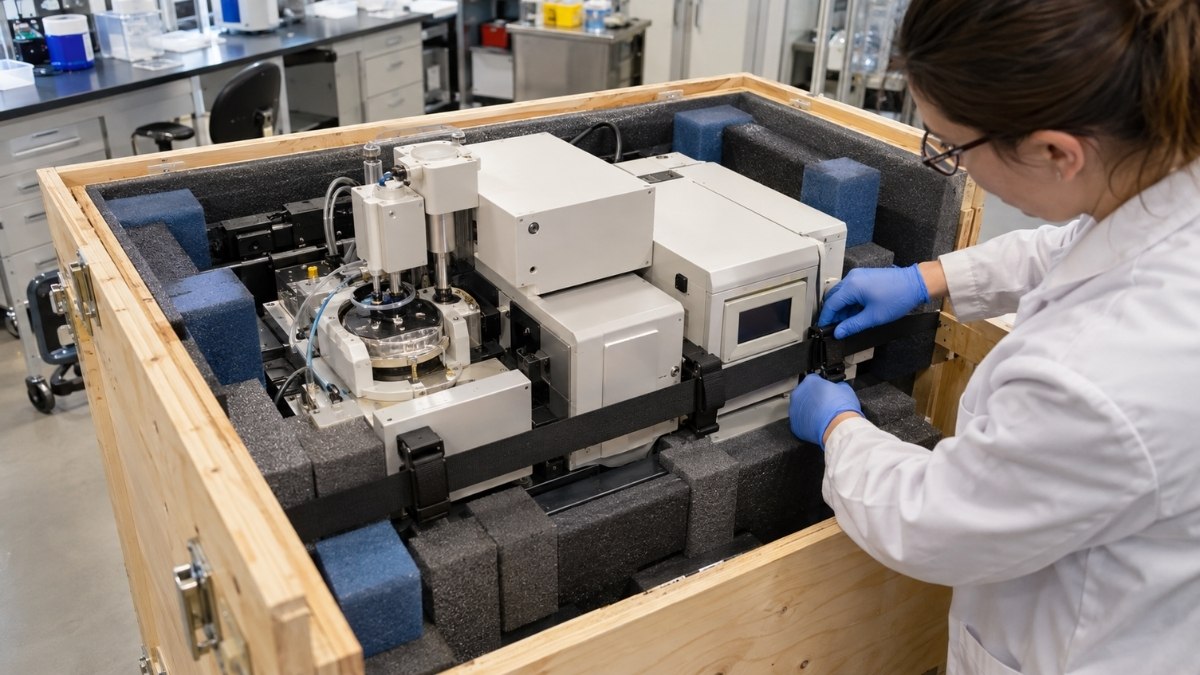
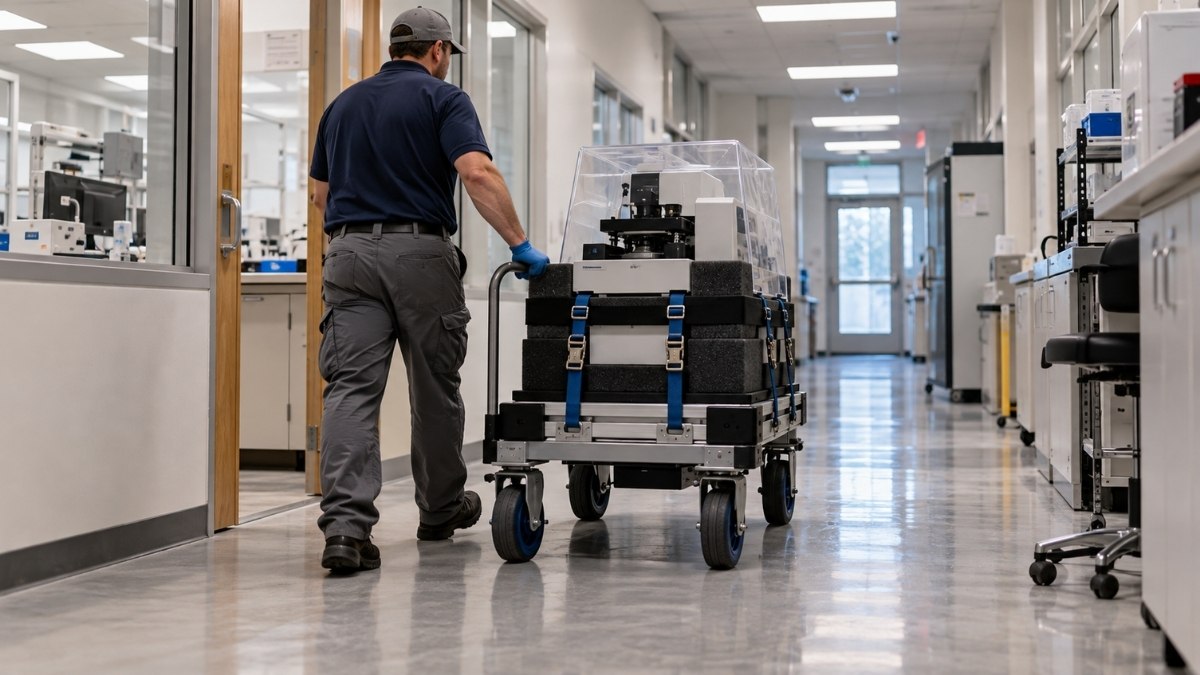
Laboratory equipment movers should plan around weight, center of gravity, fragility, lifting points, clearances, dock access, and manufacturer limits for shock, tilt, temperature, or humidity. Use equipment-appropriate blocking, cushioning, crating, labeling, and load securement.
If the laboratory needs chain-of-custody or condition records, document handoffs and exceptions.
5. Reinstall and Allow the System to Stabilize
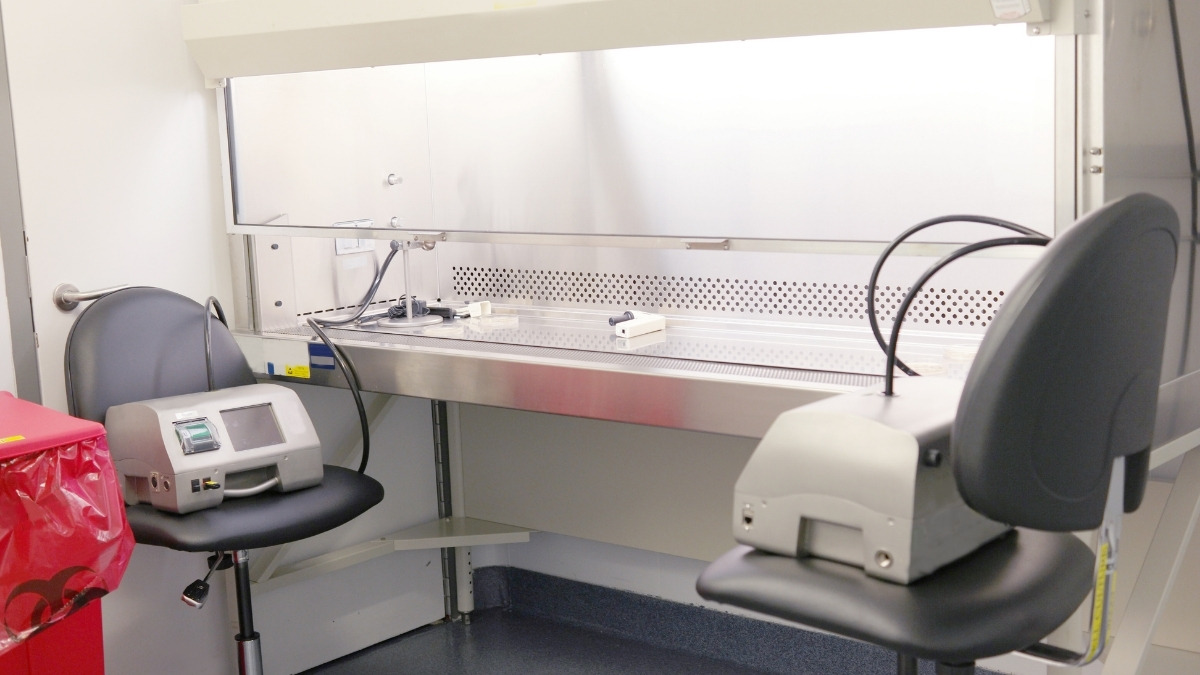
At the destination, confirm the correct room, bench, floor loading, power, grounding, gases, water, ventilation, network access, and environmental conditions before recommissioning. Some instruments may need time to reach thermal or environmental stability.
6. Calibrate, Qualify, or Validate as Required
Post-move technical requirements can vary by instrument, application, and quality system. Follow the manufacturer’s guidance, applicable standards, internal procedures, and risk assessment to determine whether calibration, qualification, validation, or other performance checks are needed before the equipment returns to service.
7. Complete Final Acceptance Before Returning to Service
Compare post-move results with the baseline. Resolve damage, alarms, drift, calibration failures, software issues, or utility problems before release. Record who performed each check, when it was completed, and what evidence supports acceptance.
What Should Be Included in a Laboratory Equipment Relocation Plan?
A laboratory equipment relocation plan should organize the move at the project level so equipment, facilities, technical teams, and vendors stay coordinated throughout the relocation.
Asset Priorities and Move Sequencing
Identify which instruments should move first, which can remain operational longer, and which assets depend on other equipment, utilities, or technical services before they can return to use.
Access Windows and Facility Readiness
Confirm loading areas, elevators, corridors, delivery windows, room readiness, and other site conditions that could affect scheduling or equipment placement.
Technical Vendor Coordination
Coordinate manufacturers, qualified technicians, laboratory equipment movers, calibration providers, and internal teams so required services are available when each asset reaches the appropriate stage of the move.
Equipment and Utility Dependencies
Document dependencies such as power, gases, ventilation, water, network connections, benches, or supporting systems that must be ready before installation or recommissioning.
Contingency Planning
Plan for delays, access issues, vendor schedule changes, equipment damage, utility problems, or other unexpected conditions. Clear escalation contacts and backup scheduling options can help keep the relocation moving without bypassing technical requirements.
Frequently Asked Questions
Can a commercial moving company calibrate laboratory instruments?
Calibration is typically handled by the equipment manufacturer, a qualified calibration provider, or another appropriate technical specialist. Laboratory equipment movers generally focus on the physical relocation scope.
Does every instrument need recalibration after relocation?
Not necessarily. Requirements can vary based on the equipment, manufacturer guidance, internal procedures, applicable standards, and the laboratory’s quality system.
What should a laboratory check before scheduling equipment pickup?
Confirm access, equipment dimensions, weight, utility disconnection needs, special handling requirements, and whether technical personnel must be present before the move begins.
Can laboratory equipment be temporarily stored during a relocation?
In some cases, yes. Storage conditions should be reviewed against the instrument’s environmental, security, packaging, and handling requirements before temporary storage is planned.
Can laboratory equipment be moved in phases?
Yes, depending on the facility, equipment, and operating schedule. A phased approach may help coordinate physical moving, technical services, and the return of critical equipment to service.
Plan the Physical Move Around the Technical Release
Moving laboratory equipment works best when the mover protects the asset and the laboratory team protects the measurement system.
Commercial Movers By Best can coordinate the physical relocation scope for sensitive and high-value commercial equipment, including planning, packing, transport, and placement, while your manufacturer, technicians, or laboratory team handles the technical work required for release.
Contact Commercial Movers By Best to discuss the physical moving requirements for your laboratory relocation.